
How to Clean Up a Trash Bag Leak in Your Trash Can
Quick Answer: Act within a day or two, before the puddle turns into odor and fruit flies. Wear gloves, pull out the leaking bag and soak up the liquid with paper towels or cat litter. Scrub the bottom with soap and water, rinse onto grass instead of the street, and let the can dry completely in the sun.
TLDR:
- A leaked bag leaves a wet film that fruit flies can breed in.
- Fruit flies can go from egg to adult in about a week.
- Gloves on, bag out, liquid soaked up before you add any water.
- Clean with soap and water first. Disinfect only after, and follow the label.
- Never mix cleaning products, and rinse onto grass, not into a storm drain.
- Dry the can completely. Moisture is what larvae need.
- Double-bag wet trash and keep liquids out to stop the next leak.
If you live in Huntsville, Madison, Athens or Harvest, you have probably had this happen. You pull the bag out on trash night and the bottom gives way. Or you lift the lid two days after pickup and find a dark puddle where the bag was sitting.
It is gross, but it is fixable. The trick is getting to it before North Alabama heat turns a small spill into a smell you can catch from the driveway.
Rather not deal with the puddle? TidyCan cleans your bins at the curb on your trash day with 200°F water and no harsh chemicals. One-time cleanings are available.
Why a Leak Needs Attention Fast
A leaked bag is not just a mess. It is a breeding site, and it starts working right away.
Texas A&M AgriLife Extension’s guide to indoor flies and their control lists “the wet bottoms of trash cans when plastic liners have leaked” first among common fruit fly breeding sites. The same guide says moisture is critical, because fly larvae cannot develop without a water source.
The University of Kentucky’s fruit fly fact sheet explains the timeline. A female can lay about 500 eggs, the full life cycle from egg to adult can take about a week, and “all that is needed for development is a moist film of fermenting material.”
So the clock starts the moment the bag gives way. Here is how to shut it down.
Step-by-Step: Cleaning Up the Leak
You do not need special equipment for a one-off leak. You need gloves, a few old towels or paper towels, dish soap, a stiff brush and a sunny spot.
1. Put on gloves and pull the bag. Lift it straight up and set it inside a fresh bag right away, so it does not drip across the driveway on the way out.
2. Soak up the liquid before you add water. Paper towels, old rags or a scoop of clay cat litter will pull up most of the puddle. Bag what you used and tie it. Adding water first just makes a bigger puddle.
3. Scrub with soap and water. The CDC’s guide to cleaning and disinfecting your home, updated in 2025, says to clean first, then sanitize or disinfect if needed. Texas A&M’s fly guide gives the same advice for trash cans: check under the liner and use soap and water to remove the residue. Work the brush into the bottom corners and the wheel well, where liquid pools.
4. Rinse onto grass, not the street. Tip the can over a patch of lawn and hose it out there. The U.S. EPA’s guidance on what you can do at home notes that storm drains usually carry water directly to rivers and streams. The EPA’s 2022 Stormwater Smart brochure suggests sending wash water to grassy areas so it can soak into the ground.
5. Dry it completely. Lay the can on its side in the sun with the lid open. This is the step most people skip, and it is the one that matters most. No moisture means nowhere for larvae to develop.
6. Disinfect only if you need to, and follow the label. The CDC says to wear the protective equipment the label calls for, use good ventilation, never mix products, and keep the surface wet for the full contact time the product lists. Let the can air-dry thoroughly before the next bag goes in.
Leak already turned into a smell? A One-Time cleaning resets the can with high-pressure 200°F water, sanitizing and deodorizing, for $60 with no subscription.
What Not to Do After a Leak
A few common shortcuts make the problem worse instead of better. Skip these.
Do not mix cleaners. It is tempting to pour in bleach and then add another cleaner for good measure. The CDC is direct about it: “Do not mix products or chemicals with each other.”
Do not hose it toward the curb. Rinse water full of rotting food residue should not run down the gutter into a storm drain. Grass soaks it up. The street sends it on to the nearest creek.
Do not leave it wet. A rinsed can that sits upright with an inch of water in the bottom is right back where you started. Drain it, tip it and let the sun finish the job.
Do not just pour in a deodorizer. Scented sprays and powders cover the smell for a day or two, but the film underneath keeps feeding bacteria and flies. Our guide to what is really behind a trash can smell explains why the residue, not the trash, is the source.
If You Find Maggots or Flies
If a leak sat for a few days before you found it, you may already have company. Do not panic. The cleanup above still works, with one extra step.
Scrape out any larvae with the absorbent material in step 2 and seal it in a tied bag before you start scrubbing. Then follow the same clean, rinse and dry sequence. Our step-by-step guide to getting rid of maggots in a trash can covers the full process.
If small flies keep hovering after the can is clean, our breakdown of what actually stops flies and gnats at the bin helps you figure out where else they are breeding.
How to Keep the Next Bag From Leaking
Most leaks start with the same few items. Handle those differently, and the bottom of the can stays dry.
- Drain liquids at the sink. Pour out leftover drinks, broth and the juice from canned food before the container goes in the trash.
- Double-bag the wet stuff. Meat trays, melon rinds and takeout boxes are the usual culprits. A grocery bag around them first costs nothing.
- Do not overfill. A stuffed bag tears when you pull it out, and a propped lid lets rain in.
- Line the bottom. A few sheets of newspaper under the bag catch small drips before they reach the plastic.
Some local rules already push in this direction. The Lauderdale County Solid Waste page says carts should not contain liquids, and the City of Florence says it does not pick up liquids. Russellville’s city code, Section 54-35(a), requires garbage to be drained and wrapped so moisture stays off the sides and bottom of the container.
When to Let a Pro Handle It
One small leak is a quick job. A can that has had several leaks over a summer is a different story, because the film bakes onto the plastic and a garden hose will not move it.
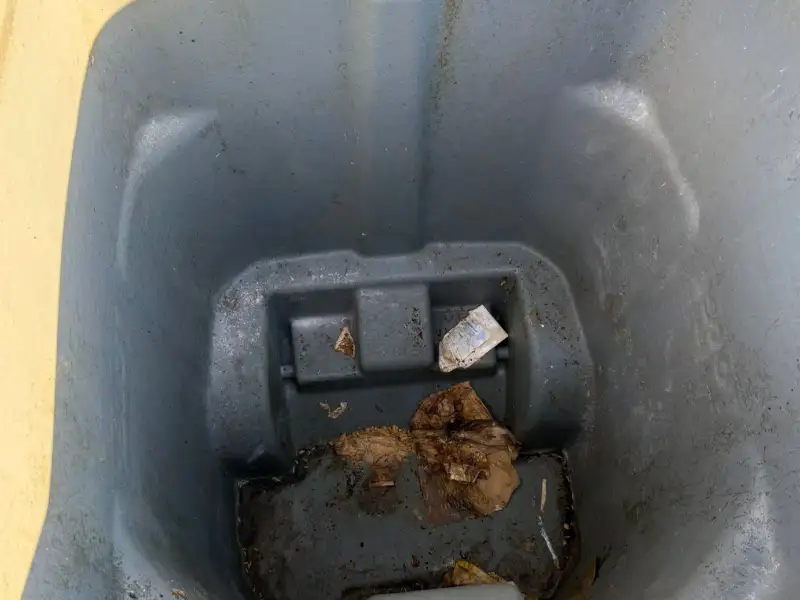 Before
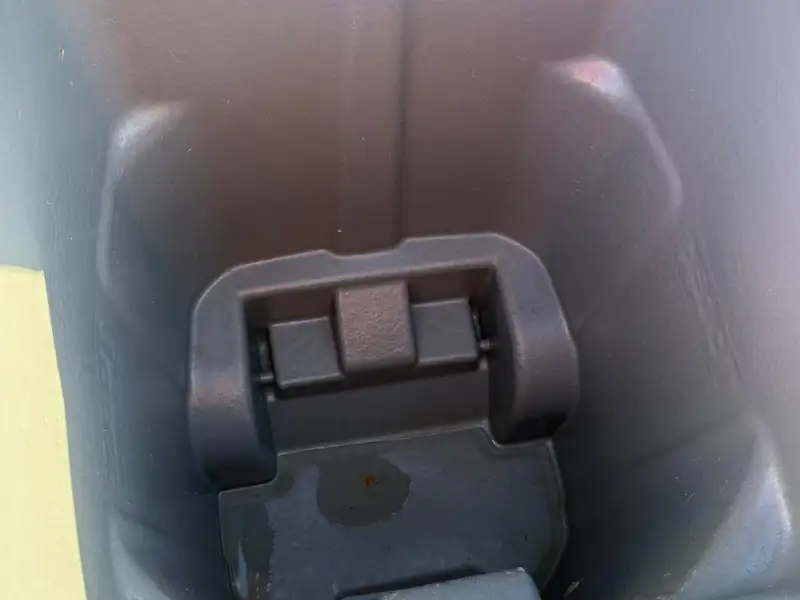 After
TidyCan cleans the inside and outside of your cans at the curb with high-pressure, 200°F water, then sanitizes and deodorizes them, with no harsh chemicals. We come on your trash day, so the can is already empty, and up to two bins are included on every plan.
If you would rather do it yourself, our Huntsville homeowner’s guide to cleaning your own trash can walks through a full DIY wash. If not, you can compare plans and prices, starting at $30 every 4 weeks.
What North Alabama Homeowners Ask After a Bag Leaks
These are the questions people ask us after finding a puddle in the bottom of the cart. If yours is not here, call or text (256) 320-8042 and ask.
How soon should I clean my trash can after a bag leaks?
Within a day or two if you can. Fruit flies need only a moist film to breed, and the University of Kentucky says their life cycle from egg to adult can take about a week. Cleaning and drying the can before that film sits for days keeps a small spill from becoming an infestation.
What is the best way to soak up liquid in a trash can?
Paper towels, old rags or clay cat litter all work. Soak up as much of the puddle as you can before adding any water, then bag and tie what you used. Adding water first only spreads the mess and leaves more liquid for you to deal with.
Can I use bleach to clean my trash can after a leak?
You can, after you clean it. The CDC says to clean surfaces with soap and water first, then disinfect if needed. Follow the product label for dilution, gloves, ventilation and contact time, and never mix bleach with any other cleaner. Let the can dry completely afterward.
Where should the dirty rinse water go?
Rinse the can over grass rather than a driveway or street. The EPA notes that storm drains usually carry water straight to rivers and streams, and it suggests sending wash water to grassy areas so it can soak into the ground. Never rinse food residue toward a storm drain.
Why does my trash can still smell after I rinsed it?
A quick rinse moves the residue around but rarely removes it, and a can left wet keeps feeding bacteria. Scrub the bottom and corners with soap, rinse, then dry the can on its side in the sun. If the smell stays, the film has likely bonded to the plastic.
How do I stop trash bags from leaking in the first place?
Drain liquids at the sink, double-bag meat trays and other wet waste, avoid overfilling bags and lay newspaper in the bottom of the can. Lauderdale County and the City of Florence both say carts should not hold liquids, so keeping them out helps with pickup too.
Skip the scrubbing next time. We clean, sanitize and deodorize your bins at the curb on trash day, so leaks never get a week to settle in. Service is contactless, you do not need to be home, and every plan price is published up front.